Travel Ideas
A Journey Through Time and Geological Adventure
When planning an excursion into nature, national parks or protected areas often come to mind. However, there is a more complex and exciting category that promises even more to discover: the geopark. But what exactly does this mean?
A geopark is not just a place with beautiful scenery. It is a unified geographical territory where geological heritage of international importance (unique rocks, fossils, or caves) is protected and promoted in a sustainable way, with the active involvement of the local community. While a national park focuses primarily on flora and fauna, a geopark emphasizes the "world beneath our feet," bringing the memory of the Earth to the forefront.
If you are eager for exploration, southwestern Romania awaits you with two special areas where the past and present literally intersect.

(Source: Trailsylvania)
The Geopark of Hațeg Country
The Hațeg Country Dinosaur Geopark is one of the most spectacular protected areas in Romania, having been a member of the UNESCO Global Geoparks Network since 2005. Here, one of the most unique ecosystems from the end of the Age of Dinosaurs has been preserved intact—a true geological treasure. In those ancient times, the Tethys Ocean covered much of Europe, while the current Hațeg Basin formed an isolated island of approximately 80,000 square kilometers. Today, the scientific community knows it as Hațeg Island.
The warm, tropical-subtropical climate maintained a humid landscape composed of rivers, marshes, and lakes. The flora was represented by ferns, palms (Pandanus), and flowering plants, which formed dense networks in flooded areas similar to modern-day mangroves.
The famous discoveries here were first described at the end of the 19th century by the eccentric Baron Franz Nopcsa. He noticed that the dinosaurs found here (such as the herbivore Magyarosaurus dacus) were much smaller than their relatives on other continents. This phenomenon is known as insular dwarfism: due to limited space and reduced food resources on the island, the animals became smaller generation after generation to survive. Thus, while titanosaurids elsewhere were the size of a house, their Hațeg relatives did not exceed the size of a horse.

(Source: Haţeg Geoparc)
The administration of the Geopark is managed by the University of Bucharest, which coordinates research, education, and promotion activities. Children can choose from a variety of interactive educational packages where, under the guidance of animators, the worlds of volcanoes, paleontology, and botany are presented in a playful way.
Discovery in the Geopark doesn't stop at the visiting centers; tourists have six different thematic trails at their disposal through which the past comes to life: Dinosaur Valley, Volcano Road, Geodiversity and Art, Stories in Stone, History and Legends, and Nature and Tradition.

(Source: Haţeg Geoparc)
The Mehedinți Plateau Geopark
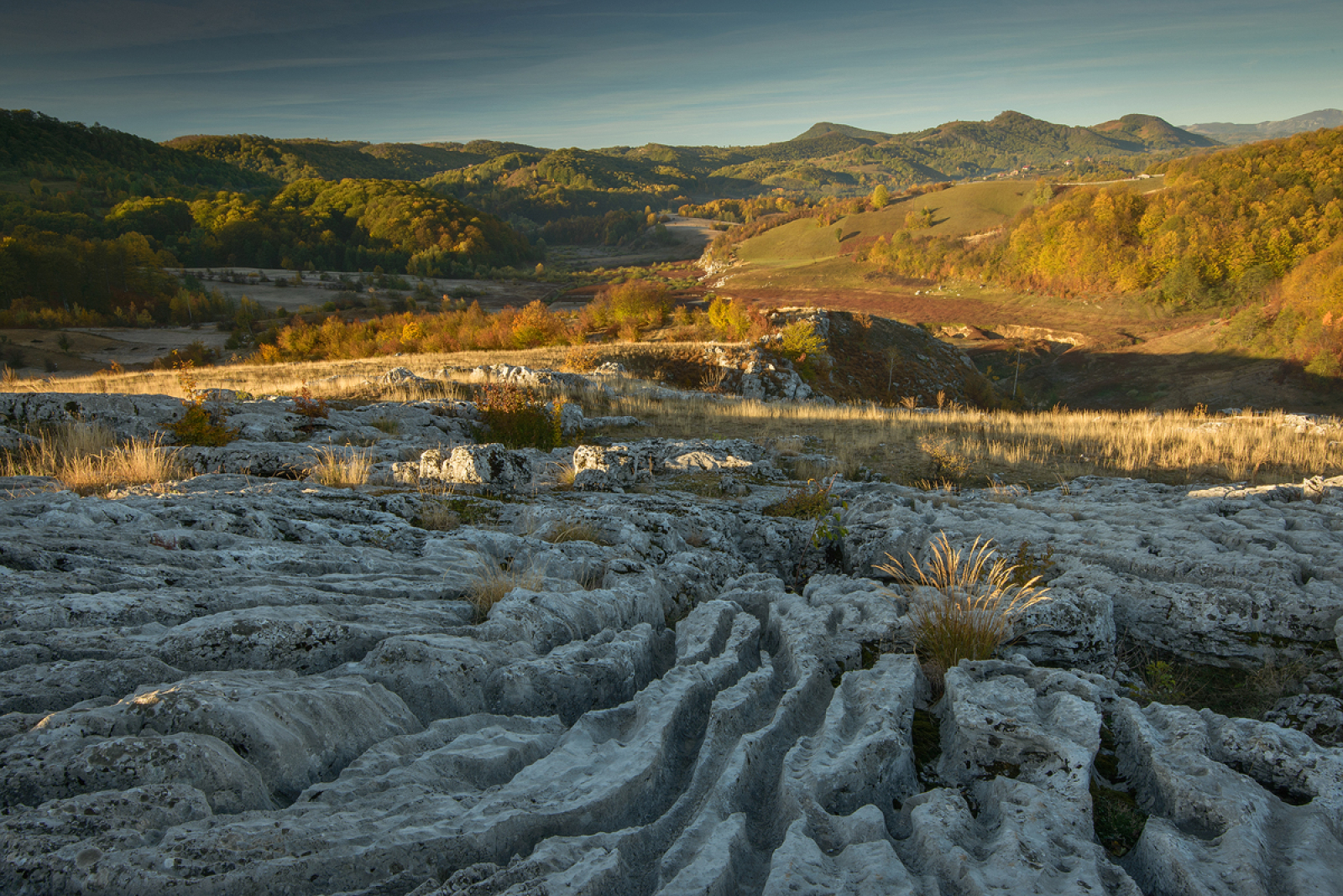
The adventure continues beyond the borders of Hunedoara County! To the south lies the Mehedinți Plateau Geopark, a true paradise for enthusiasts of caves, gorges, and karstic relief. This territory is an open-air museum of exokarst and endokarst phenomena. The "sculpting" work of water, carried out over millions of years, is visible at every step: the plateau surface is furrowed by deep grooves called lapiez, which transform the limestone rocks into a lunar landscape.
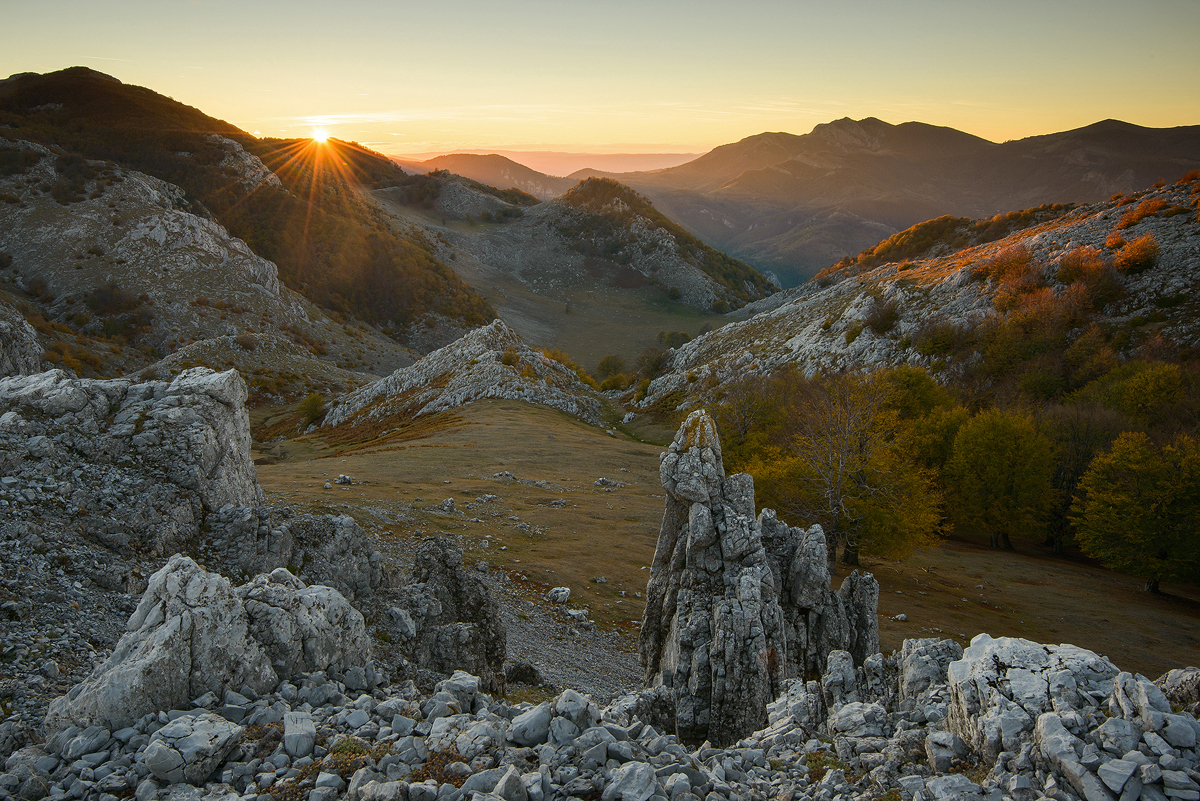
(Source: România Sălbatică)
One of the most iconic attractions of the Mehedinți Plateau is God's Bridge (Podul lui Dumnezeu) in the locality of Ponoarele. This is the largest natural bridge in Romania and one of the few in the world open to road traffic. The bridge is actually the remnant of the collapsed ceiling of a giant cave. Right next to it, two stunning lakes (Zătonul Mare and Zătonul Mic) and the mysterious Ponoarele Cave await visitors.
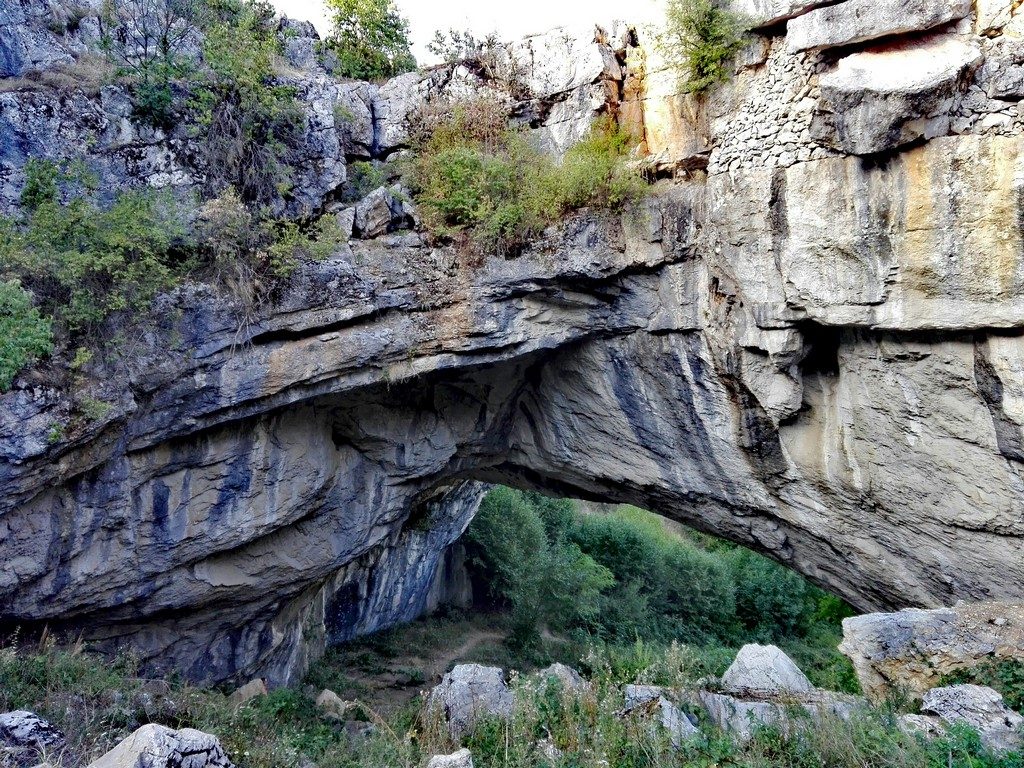
(Source: Tara Dacilor)
The climate of the geopark brings with it fascinating surprises. Due to sub-Mediterranean influences, the area shelters rare species such as the horned viper and the spur-thighed tortoise. Additionally, spring transforms the entire landscape into a fragrant spectacle when the blooming of wild lilacs attracts thousands of visitors.
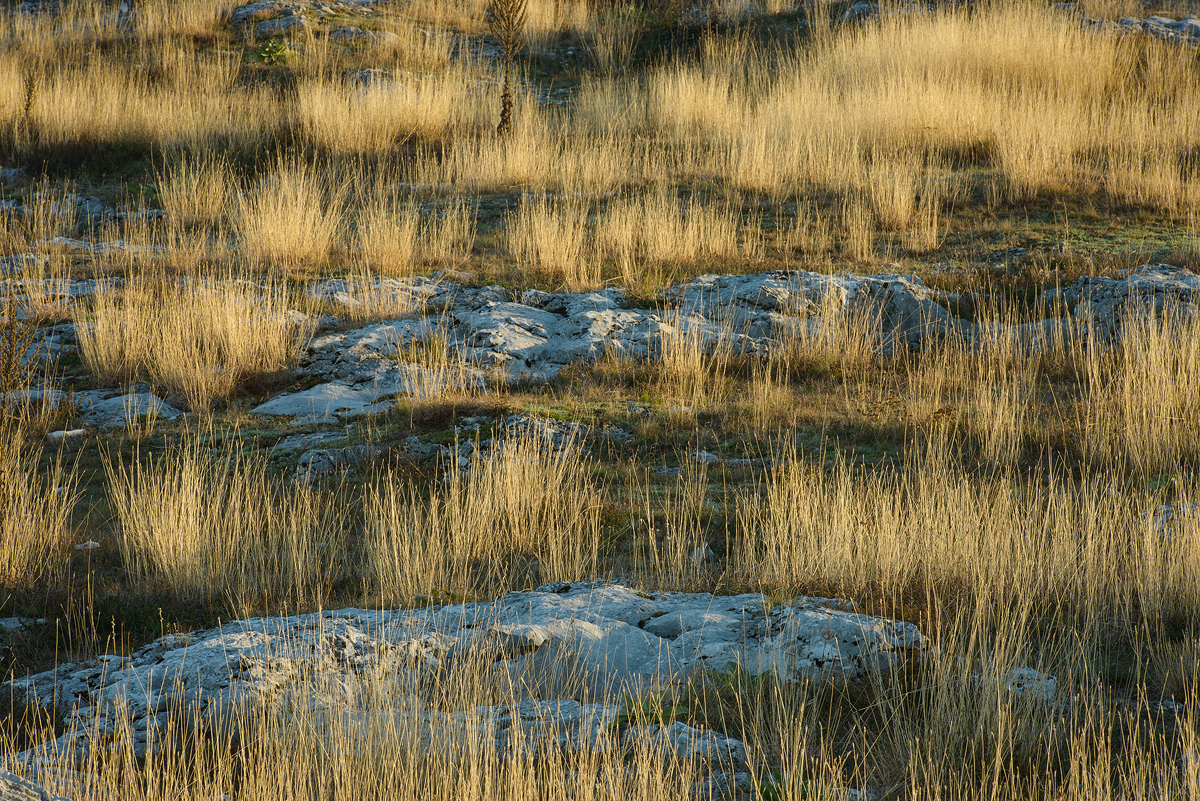
(Source: România Sălbatică)
A journey into the world of geoparks is the perfect relaxation for all those who love nature, hiking, and desire a deeper perspective on our planet's past. These two geoparks represent the ideal choice for a weekend getaway.
If you are passionate about the past and want to spend quality time in the heart of nature, hit the road and book your accommodation now on stayhere.ro to explore these treasures of Romania!